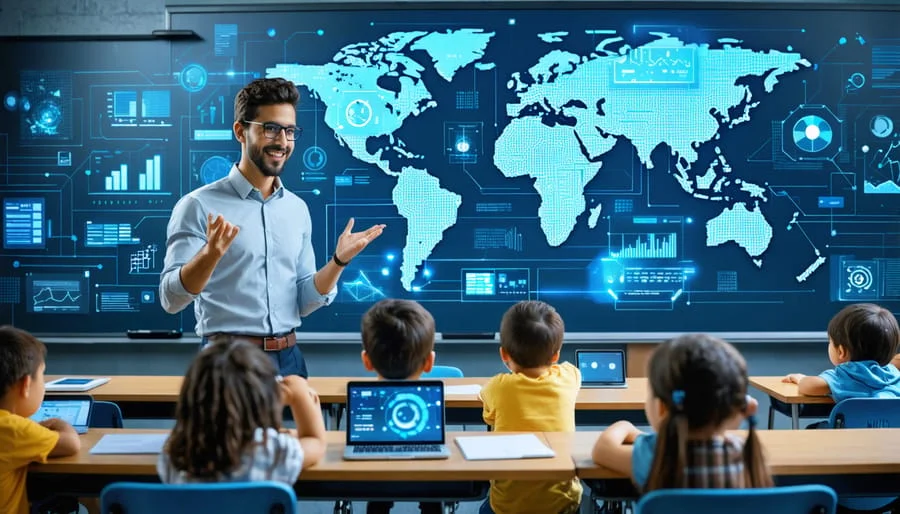
Education is undergoing one of the most significant transformations in modern history. With the rise of artificial intelligence, traditional learning methods are being enhanced, personalized, and in some cases completely redefined. Students today are no longer limited to textbooks, static lectures, or one-size-fits-all teaching methods. Instead, they have access to intelligent systems that adapt to their learning pace, identify knowledge gaps, and provide real-time support.
This shift toward digital intelligence is making education more efficient and accessible than ever before. At the center of this transformation is the growing use of ai for students, which is helping learners improve understanding, productivity, and academic performance through smarter tools and adaptive learning systems.
The Rise of AI in Modern Education
Artificial intelligence has quickly become a powerful force in education technology. From virtual tutors to intelligent grading systems, AI is being integrated into classrooms, online platforms, and self-learning environments.
Unlike traditional teaching methods, AI-powered systems can analyze student behavior, track progress, and adjust content accordingly. This means that each student receives a personalized learning experience tailored specifically to their strengths and weaknesses.
As education systems around the world become more digital, AI is helping bridge gaps in access, quality, and engagement.
How AI-Powered Learning Tools Work
AI-powered education tools rely on data analysis and machine learning algorithms to understand how students learn. These systems collect information such as quiz results, study patterns, and interaction time to build a learning profile for each student.
Based on this profile, the system can recommend specific lessons, practice exercises, or revision materials. If a student struggles with a particular topic, the system can automatically provide additional explanations or simplified content.
This adaptive approach ensures that students do not move forward with gaps in understanding, leading to stronger long-term academic performance.
Personalized Learning Experience
One of the biggest advantages of AI in education is personalization. Every student learns differently, and traditional classrooms often struggle to accommodate these differences.
AI-powered tools solve this problem by adjusting content difficulty, pacing, and teaching style based on individual needs. Visual learners may receive more diagrams and videos, while analytical learners may get problem-solving exercises and structured explanations.
This personalized approach helps students stay engaged and motivated, as they are learning in a way that suits them best.
Role of AI Tutors and Virtual Assistants
AI tutors are becoming increasingly popular among students who need extra support outside the classroom. These virtual assistants can answer questions, explain concepts, and provide step-by-step solutions in real time.
Unlike human tutors, AI systems are available 24/7, allowing students to learn whenever they need help. This flexibility is especially beneficial for students with busy schedules or those studying in different time zones.
AI tutors also provide instant feedback, helping students correct mistakes and improve understanding immediately rather than waiting for teacher evaluations.
Improving Study Efficiency with AI Tools
AI-powered education tools are designed to make studying more efficient. Instead of spending hours searching for information, students can quickly access summarized explanations, key concepts, and targeted practice questions.
Some tools even analyze exam patterns and suggest the most important topics to focus on. This helps students prioritize their study time and improve performance in less time.
By using ai for students, learners can optimize their study routines and reduce unnecessary effort while achieving better results.
AI in Homework and Assignment Support
AI is also changing the way students complete homework and assignments. Intelligent systems can guide students through complex problems without simply giving away answers.
Instead, they break down questions into smaller steps, helping students understand the reasoning behind each solution. This encourages deeper learning rather than memorization.
AI tools can also check grammar, suggest improvements in writing, and help structure essays more effectively, making academic writing easier and more polished.
Enhancing Classroom Learning with AI
In traditional classrooms, teachers often face challenges in managing large groups of students with different learning abilities. AI helps solve this problem by providing teachers with detailed insights into student performance.
Educators can use AI-generated reports to identify which students need extra support and which topics require more attention in class. This allows for more effective lesson planning and targeted instruction.
AI also supports interactive learning through smart classrooms, where digital tools enhance engagement and participation.
Accessibility and Inclusive Education
AI is making education more inclusive by supporting students with different learning needs and abilities. Speech-to-text tools, language translation systems, and adaptive reading platforms help students overcome barriers to learning.
Students with disabilities can benefit from AI-powered tools that convert text into audio, provide visual aids, or simplify complex content.
This inclusivity ensures that education becomes accessible to a wider audience, regardless of physical or cognitive challenges.
Challenges of AI in Education
Despite its many benefits, AI in education also comes with challenges. One major concern is over-reliance on technology. Students may become too dependent on AI tools and reduce their critical thinking or problem-solving efforts.
Data privacy is another concern, as AI systems collect and analyze large amounts of student information. Ensuring that this data is stored securely and used responsibly is essential.
There is also the challenge of equal access. Not all students have access to advanced devices or stable internet connections, which can create a digital divide.
The Future of AI in Education
The future of education will likely be deeply integrated with artificial intelligence. AI systems will become more advanced, offering even more accurate personalization and predictive learning capabilities.
Future tools may be able to predict academic performance, identify learning difficulties early, and automatically design customized learning paths for each student.
Virtual reality and AI combined could also create immersive learning environments where students can experience historical events, scientific experiments, or complex simulations in real time.
As these technologies evolve, ai for students will continue to play a central role in shaping modern education systems.
Final Thoughts
Artificial intelligence is transforming education into a more personalized, efficient, and accessible experience. By adapting to individual learning styles and providing real-time support, AI-powered tools are helping students achieve better results with less effort.
From virtual tutors and smart study assistants to personalized learning platforms, AI is reshaping how students learn, study, and succeed academically.
While challenges such as privacy and accessibility still need to be addressed, the overall impact of AI in education is overwhelmingly positive.
As technology continues to advance, students who embrace AI-powered tools will have a significant advantage in their academic journey, making learning smarter, faster, and more effective than ever before.