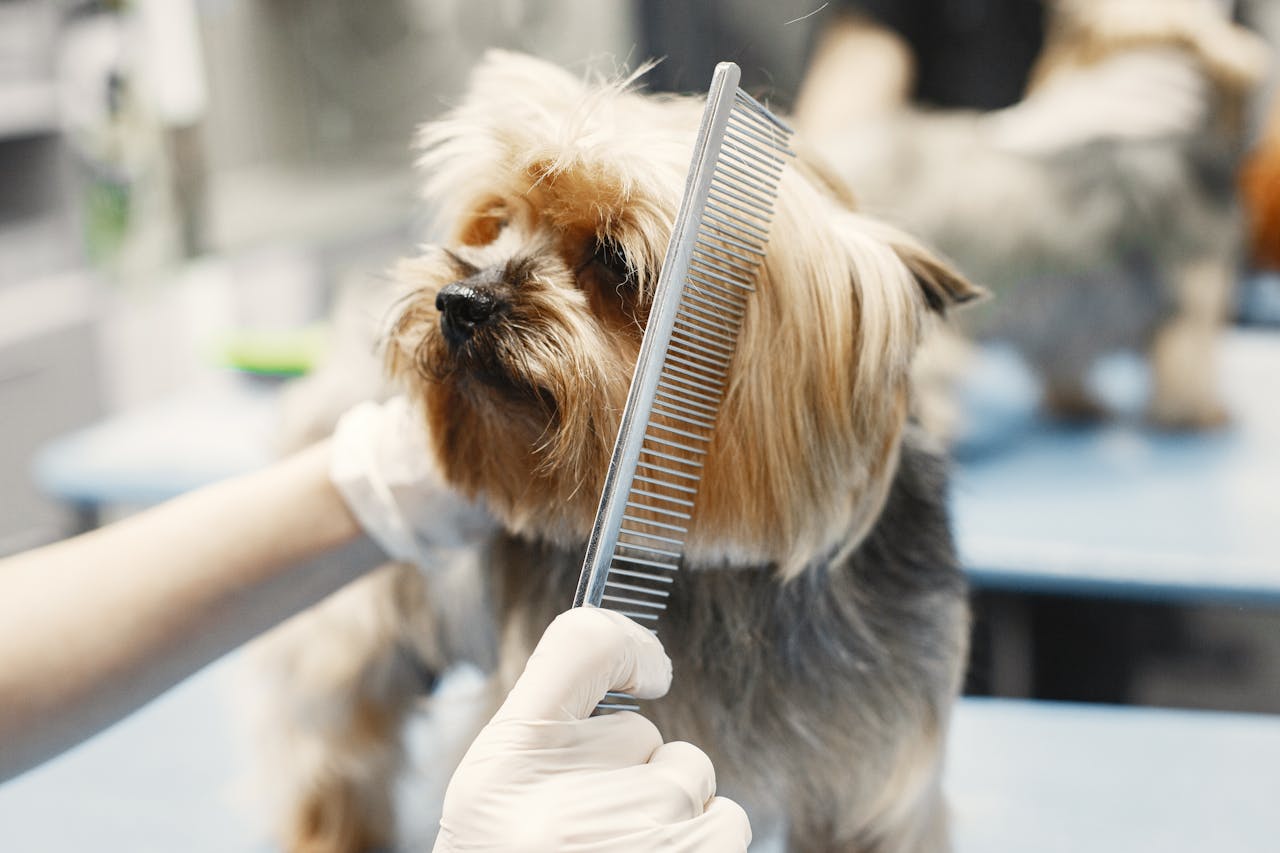
Grooming is part of good care, but many dogs find it confusing or stressful at first. Brushing, nail trims, baths, dryers, and even gentle restraint can feel strange, especially if a dog has had a past scare or simply never learned what to expect. Gradual desensitization paired with positive rewards can help change a dog’s emotional response from “uh oh” to “I can handle this.”
The key is to go slow enough that your dog stays relaxed and to break each grooming task into small steps. Short, frequent practice sessions tend to work better than long sessions that push a dog past their comfort level.
Start With the Right Mindset and A Calm Setup
Desensitization works best when the trigger is introduced at a low intensity, low enough that your dog does not feel the need to pull away, freeze, or escalate. Pair each tiny step with something your dog genuinely loves, such as high-value treats or a favorite toy, so the grooming cue predicts good things.
Set up your environment to help your dog succeed. Choose a quiet space, use a non-slip mat, and keep sessions brief. If your dog shows signs of stress, such as tensing, pulling away, lip licking, yawning, or avoidance, pause and make the next repetition easier rather than trying to push through.
Teach “Handling First” Before You Introduce Tools
Many grooming struggles start with sensitivity to touch. Begin with gentle, predictable handling in areas your dog already tolerates, then slowly work toward more sensitive spots like paws, ears, tail, and belly. A simple pattern is: touch for one second, treat, then stop. Repeat until your dog stays loose and comfortable, then increase the duration or move slightly closer to the sensitive area.
You can also build “cooperative care” behaviors that give your dog a sense of choice, such as teaching a chin rest on your hand or having your dog place a paw in your palm briefly. Husbandry training emphasizes that grooming can become easier when dogs learn to participate rather than be held still.
Introduce Grooming Tools in Tiny, Rewarded Steps
Once your dog accepts calm handling, you can start introducing tools like brushes, combs, clippers, and nail trimmers. Let your dog see the tool at a distance, then reward. Next, let your dog sniff it, reward again, and put it away.
For brushing, start where your dog is most comfortable, often the shoulders, neck, or back, and do only a few strokes before rewarding and stopping. Gradually increase the number of strokes and expand to other areas over multiple sessions. For sound-sensitive dogs, treat the noise as its own step. Turn clippers on across the room, reward, turn them off, and repeat until the sound no longer causes tension.
The goal is not to “get it done.” The goal is to teach your dog that the tool predicts something positive and that the intensity will not jump unexpectedly.
Nail Trims and Baths: Go Slower Than You Think You Need To
Nail care is one of the most common stress points, largely because paws are sensitive and a past painful experience can create a lasting negative association. Veterinary behavior guidance recommends breaking nail trims into many small steps, rewarding each step, keeping sessions short, and only progressing when your dog stays comfortable.
A practical progression might look like: touch the shoulder, treat; touch the leg, treat; touch the paw, treat; apply gentle pressure to one nail, treat; bring clippers into view, treat; touch clippers to the nail without clipping, treat. If your dog is already fearful, avoid “tricking” them with a distraction and then clipping quickly, as that can damage trust and worsen fear over time.
For baths, keep the first sessions dry. Practice stepping into the tub, hearing the water run at a distance, and feeling gentle touches with a damp cloth before you attempt a full bath. RSPCA guidance also recommends starting with short sessions, rewarding calm behavior, and gradually increasing both time and body areas groomed.
When To Bring in A Professional and What to Ask For
Sometimes the kindest and safest path is to work with a groomer who knows how to keep the process calm and structured, especially if your dog has a history of fear or snapping. AKC guidance on desensitization emphasizes avoiding overwhelming experiences, since “flooding” can backfire and make fear worse.
When you call a salon, ask how they reduce stress. For example, some grooming businesses describe using one-on-one care in a calm environment, strict safety protocols, and appointment flow designed to keep dogs separate and reduce wait times, which can help sensitive dogs feel less overwhelmed. It can also be useful to ask what services are included so you can practice similar handling steps at home, such as nail trimming, ear cleansing, brushing, and bathing routines.
If you decide to bring in professional help, you might search dog groomers in Raleigh, NC or a city near you, then focus on places that mention a calmer setup, clear safety practices, and a clean environment. That way, the appointment builds on the progress you have already made.
Conclusion
Desensitizing a dog to grooming is not about forcing tolerance. It is about building trust through tiny steps that stay under your dog’s stress threshold, then rewarding calm behavior until grooming becomes familiar. With patience, short sessions, and a plan that progresses at your dog’s pace, many dogs learn to accept and even relax during brushing, bathing, and nail care.